Hindu deities, known as Devas and Devis (gods and goddesses), represent various aspects of the divine and cosmic forces. While Hinduism is often perceived as polytheistic with multiple gods, the underlying philosophy is deeply monistic—all these deities are considered manifestations or aspects of Brahman, the ultimate divine reality. Each deity embodies specific qualities, powers, and domains, serving as a focus for devotion (Bhakti) and spiritual practice.
Below are brief introductions to widely worshipped deities: Shiva, Vishnu, Rama, Krishna, Shakti, Muruga, Ganesh, and Hanuman.
Major categories
Deities can be grouped by cosmic role: the Trimurti (Brahma, Vishnu, Shiva), avatars such as Rama and Krishna, goddess forms (Shakti), the Navagraha, and regional deities. In philosophy, Brahman is the formless ultimate reality; Ishvara and the deities are personified expressions that allow devotees to connect with the divine.
The six primary forms of worship in Hinduism, often categorized as Shanmata (six systems), were popularized by Adi Shankaracharya to unify diverse traditions under one Advaita philosophy. They involve the veneration of six main deities:
Vaishnavism (Vishnu): Worship of Vishnu, including his avatars like Rama and Krishna, as the supreme maintainer of the universe.
Shaivism (Shiva): Focuses on the worship of Shiva, representing the destroyer and transformer within the Trinity.
Shaktism (Shakti/Devi): Worship of the Divine Mother or Goddess (Ambaa, Devi) as the supreme power.
Ganapatyam (Ganesha): Veneration of Ganesha, the remover of obstacles and lord of beginnings.
Kaumaram (Kumara/Murugan): Worship of Kartikeya (also known as Murugan or Kumara), the commander of the divine army.
Saurism (Surya): Worship of Surya, the Sun God, representing light and life.
These six systems allow devotees to choose a primary deity (Ishta Devata) while recognizing all as different aspects of the same supreme Brahman.
Shiva
Shiva is one of the principal deities of Hinduism, the destroyer and transformer within the Trimurti (with Brahma the creator and Vishnu the preserver). He is also the supreme being in Shaivism. Shiva is associated with asceticism, yoga, the sacred syllable Om, and the cosmic dance (Tandava). He is often depicted with a third eye, the Ganga in his hair, a crescent moon, and the serpent Vasuki. His consort is Parvati (Shakti), and his sons include Ganesha and Kartikeya (Muruga). The twelve Jyotirlingas and the Panchabhoothasthalams are among the most sacred Shiva temples.
Vishnu
Vishnu is the preserver and sustainer in the Trimurti. In Vaishnavism he is the supreme reality. He is depicted with four arms holding the conch, discus, mace, and lotus, and is often shown resting on the serpent Shesha. His consort is Lakshmi. Vishnu descends to earth in avatars (incarnations) to restore dharma—the ten principal avatars are the Dashavatara, including Rama and Krishna. The 108 Divya Desams are among the most revered Vishnu temples, celebrated in the Tamil Alvar hymns.
Rama
Rama is the seventh avatar of Vishnu and the hero of the epic Ramayana. He is revered as the ideal king, son, husband, and embodiment of dharma (righteousness). Born in Ayodhya, Rama is depicted with a bow and arrow; his consort is Sita, and his devoted ally is Hanuman. His life story—exile, Sita’s abduction by Ravana, and the eventual victory of good over evil—is a cornerstone of Hindu devotion and moral teaching.
Where to find his story: The Ramayana of Valmiki (in Sanskrit) is the classic source. A reliable place to read it online is the Valmiki Ramayana at IIT Kanpur (valmiki.iitk.ac.in): it offers the full Sanskrit text with English and other language translations, organised by chapter (sarga) and by verse (shloka), so you can follow the original and study it in depth. In North India, Tulsidas’s Ramcharitmanas (in Awadhi/Hindi) is widely read and recited. The epic is also retold in regional languages and in the Tamil Kamba Ramayanam.
Krishna
Krishna is the eighth avatar of Vishnu and one of the most beloved deities in Hinduism. He is worshipped as a divine child, a playful cowherd (Gopala), the teacher of the Bhagavad Gita, and the supreme lord of bhakti. His life encompasses his birth in Mathura, childhood and youth in Vrindavan (leelas with the gopis and the lifting of Govardhana), and his role in the Mahabharata as the charioteer and guide of Arjuna at Kurukshetra.
Where to find his story: The Mahabharata (including the Bhagavad Gita) tells his role in the Kurukshetra war and his teachings on dharma and devotion. The Bhagavata Purana (Srimad Bhagavatam) recounts his birth, childhood leelas, and his life in detail. The Harivamsha and regional texts such as the Gita Govinda (by Jayadeva) also celebrate his life and devotion.
Shakti
Shakti is the divine feminine energy and the creative power of the universe. She is worshipped in many forms: as Parvati (consort of Shiva), Durga (the warrior goddess), Kali (the fierce aspect), Lakshmi (prosperity), and Saraswati (wisdom and arts). The goddess is central to Shaktism, where she is seen as the supreme reality. The 51 Shakti Peethas are sacred sites associated with the goddess, and festivals such as Navaratri and Durga Puja celebrate her many forms.
Muruga
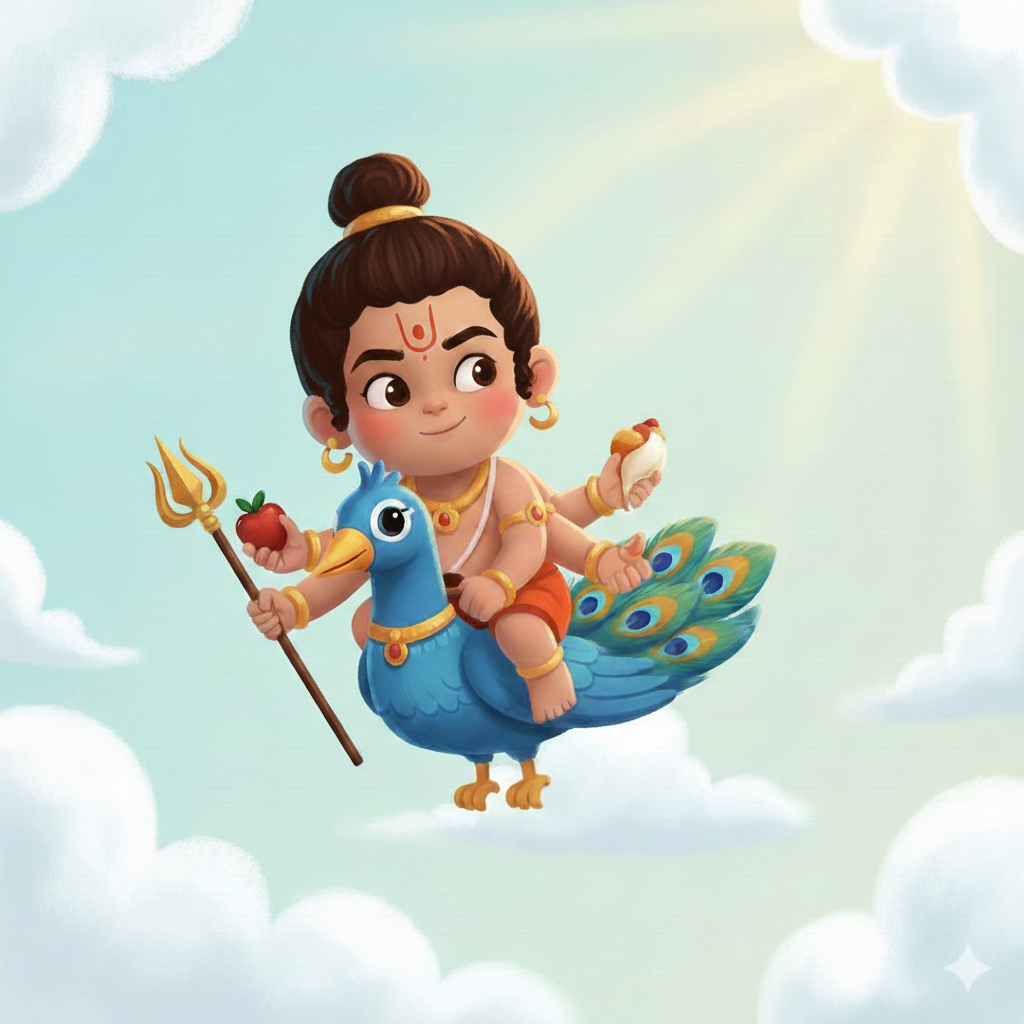
Muruga (also known as Kartikeya, Skanda, or Subrahmanya) is the son of Shiva and Parvati and the brother of Ganesha. He is the god of war, victory, and wisdom, and is widely worshipped in South India, especially in Tamil Nadu. His six sacred abodes are the Arupadai Veedu: Palani, Swamimalai, Thiruthani, Pazhamudircholai, Thiruchendur, and Thirupparankundram. Muruga is depicted with six faces and twelve arms, and his vehicle is the peacock. Thaipusam and Skanda Shashti are major festivals in his honour.
Ganesh
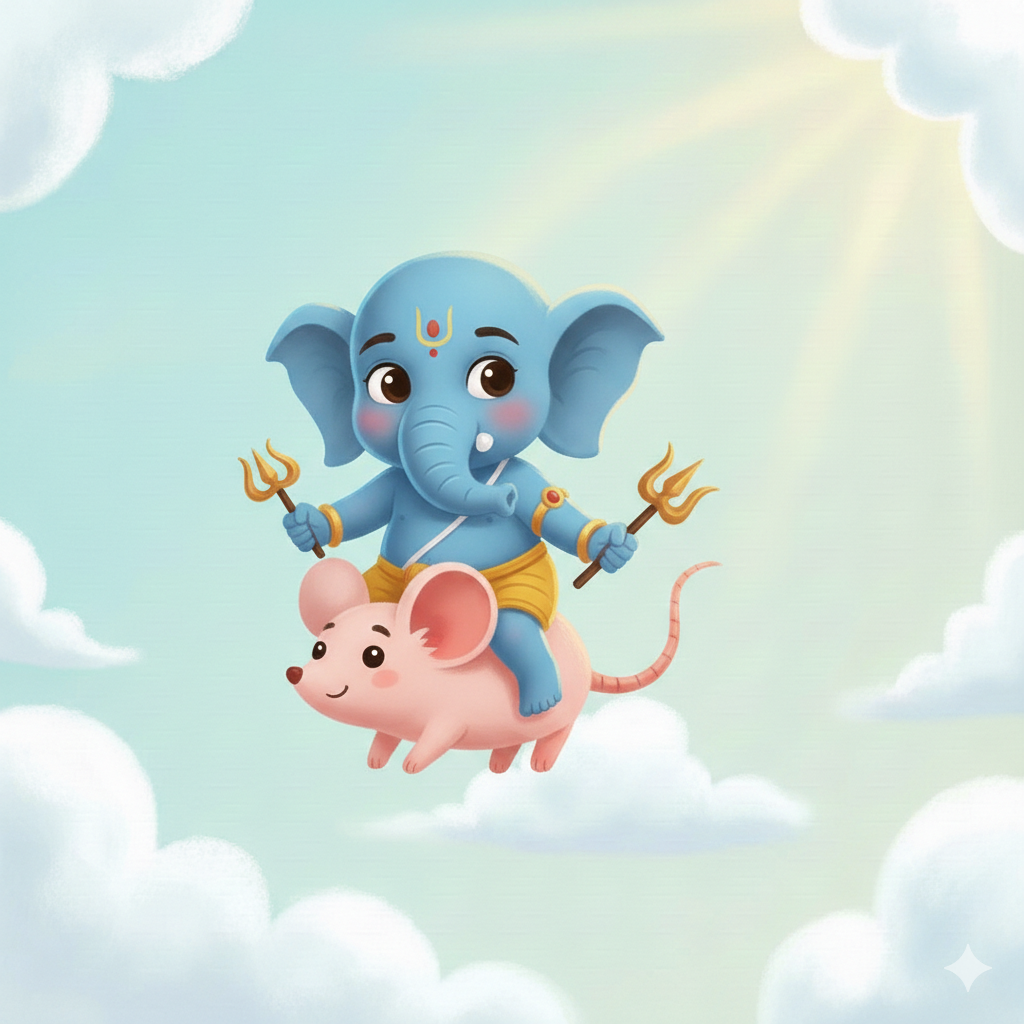
Ganesh (Ganesha, Vinayaka) is the elephant-headed god of wisdom, beginnings, and the remover of obstacles. He is the son of Shiva and Parvati and is invoked at the start of rituals, journeys, and new ventures. His vehicle is the mouse, and he is often shown with a broken tusk, modak (sweet), and the gesture of blessing. The eight temples of the Ashtavinayak in Maharashtra are among his most famous pilgrimage sites. Ganesh Chaturthi is the major festival celebrating his birth.
Shlokas
Vakratunda Mahakaaya
Shloka (Sanskrit):
vakratuṇḍa mahākāya sūryakoṭi samaprabha
nirvighnaṃ kuru me deva sarva kāryeṣu sarvadā
Meaning: O Lord Ganesha, with the curved trunk and mighty form, whose radiance is like millions of suns, please remove all obstacles from the actions I wish to undertake, at all times.
Mooshika Vaahana Modhaka Hastha
Shloka (Sanskrit):
mūṣika vāhana modaka hasta
cāmara karṇa vilambita sūtra
vāmana rūpa mahēśvara putra
vighna vināyaka pāda namastē
Meaning: Salutations to Lord Vinayaka, son of Maheshwara, who rides the mouse, holds modak in his hand, whose ears are like fans, who wears a sacred thread and appears in a short form. We bow to his feet, the remover of obstacles.
Meaning: I bow to Lord Vighneshwara, son of Uma, who has the face of an elephant, is served by the hosts of beings, who enjoys the essence of kapittha and jambu fruits, and who removes sorrow and obstacles.
Mantra chant
Om Gan Ganpataye Namah
Mantra: Om Gan Ganpataye Namah (ॐ गं गणपतये नमः)
Chant this mantra to invoke Lord Ganesha’s blessings for auspicious beginnings and removal of obstacles.
Hanuman
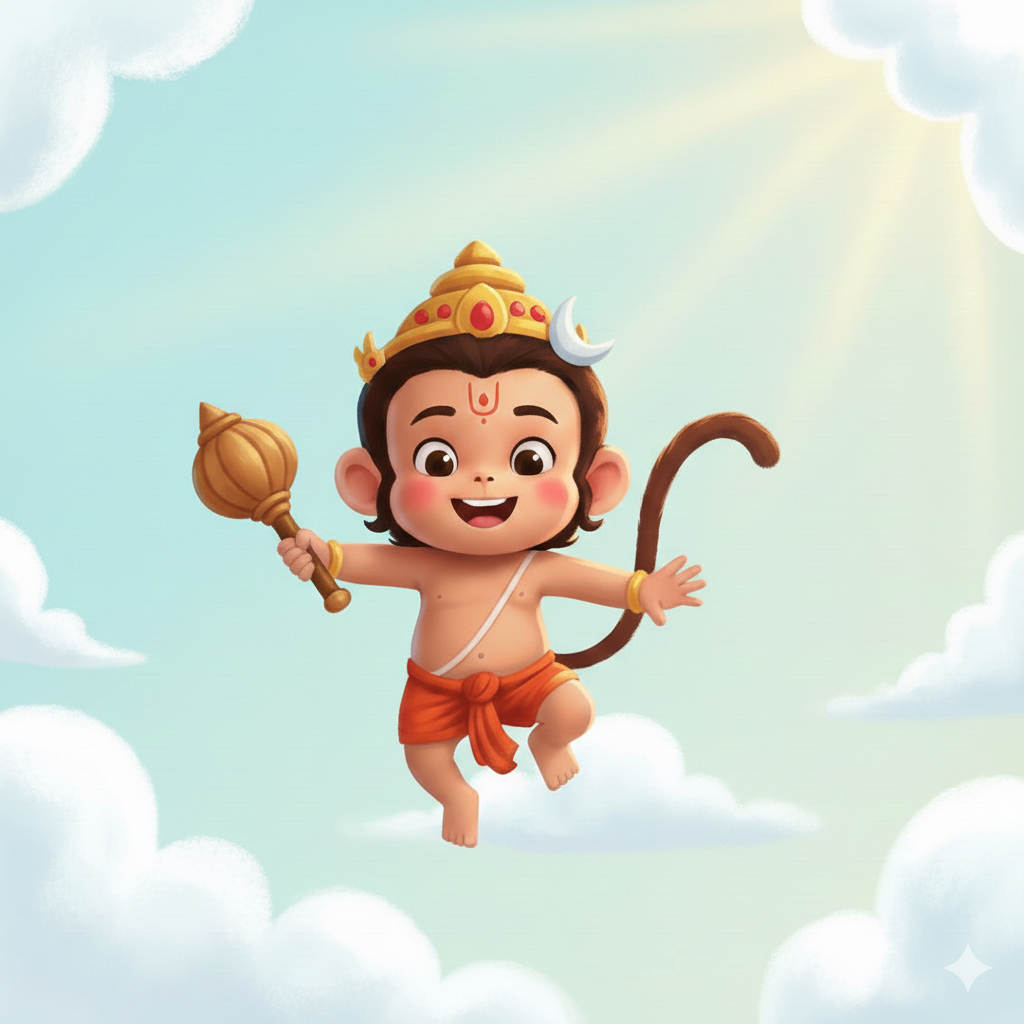
Hanuman is the divine monkey god, a devotee of Rama and a central figure in the Ramayana. He embodies strength, devotion (bhakti), and selfless service. Hanuman is worshipped for courage, protection, and health, and is often invoked to overcome difficulties. He is depicted with a mace (gada) and the Sanjivani mountain, and is said to be celibate and ever devoted to Rama and Sita. Temples dedicated to Hanuman are found throughout India; Tuesdays and Saturdays are considered especially auspicious for his worship.